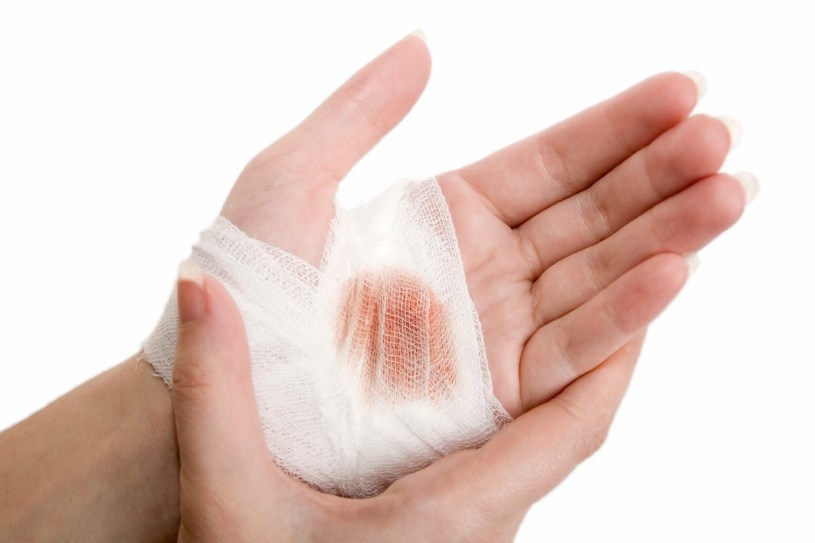
A skin wound is an opening in the skin due to a mechanical cause. More or less severe, any wound requires specific care to stop bleeding, avoid infectious complications, and promote good healing. Indeed, the skin protects the whole body against external aggressions; it is, therefore, essential to ensure proper healing of wounds.
How to Treat a Wound?
This may be handled at home or need treatment, depending on the extent of the wound. Thus, it is really necessary to determine the seriousness accurately. In addition, superficial injuries may be handled and are a modification to the epidermis and superficial dermis: abrasions, shallow wounds, first and second degree burns. On the other side, whether the wound is large, open and severe, excessive bleeding or on the nose, throat, leg, stomach, or abdomen, consult with urgency. It is necessary to test whether you are diabetic, immunosuppressed, or whether there are symptoms of infection. It is important to take three measures when you have a wound and to encourage good healing:
- Clean the wound: either with soap and water or with physiological serum
- Disinfect the wound: using an antiseptic and compresses
- Protect the wound: with dressings
Before starting the treatment, it is very important to have good hygiene and, therefore, to wash your hands carefully.
WOUND CLEANING
This step consists of removing all foreign bodies (debris, dust, etc.) and germs. It is enough to clean the wound with water and mild soap; you can also use physiological saline. Once washed, it is essential to dry the wound thoroughly, preferably using a woven or non-woven compress (if you do not have a compress, you can use a clean cloth).
WOUND DISINFECTION
Disinfection of the wound involves the use of a disinfectant, which will eliminate the risk of infection. It is best to use alcohol-free antiseptics to avoid pain and irritation of the lesion.
WOUND PROTECTION
After wound disinfection, a bandage or patch with sticky plaster can be required to cover the wound. A wound-healing cream or wound healing salad may also be used to enhance wound healing. Under all situations, it is necessary to keep the region moist to facilitate healing burning sensation, minimizing the development of an overly broad, thick, rough, or irregular wound. When the bleeding is moderate but needs care, the drugs may be included here:
- Nose bleed: coalgan , nasal wicks
- Skin, nasal or dental bleeding: gelatin sponge
- For other areas, use conventional dressings.
How to Heal Faster?
The healing time lasts approximately 21 days and cannot be accelerated. However, there is something that can be done to promote healing. The wound healing process consists of three phases:
- The defense phase: stage during which the body defends itself, thanks to the immune cells, against infections.
- The repair phase: stage during which new tissues will form. This is when a superficial layer forms on the skin to cover it.
- The maturation phase: the longest period, because it may last between 2 months and two years. During this process, collagen and elastin fibers are reinforced to preserve the epidermis structure.
Okay, so what’s a soothing cream or ointment for? We play a crucial role in enhancing the replication cycle, healing tissues and avoiding scaffolding. “Why should we place jelly petroleum on a wound? All right, but what’s a cream or ointment for the soothing? In improving the replication process, regeneration of tissues, and preventing skinning, we play a key role. ‘Why do we place Jelly Petroleum on a wound?’ and to save oxygen by keeping it from drying up and forming a covering (be sure not to use Petroleum Jelly on an iron wound). Scab-covered wounds take longer to heal. No misunderstandings. In reality, no misunderstandings, scab-covered wounds take longer to heal.
 Tech Strike