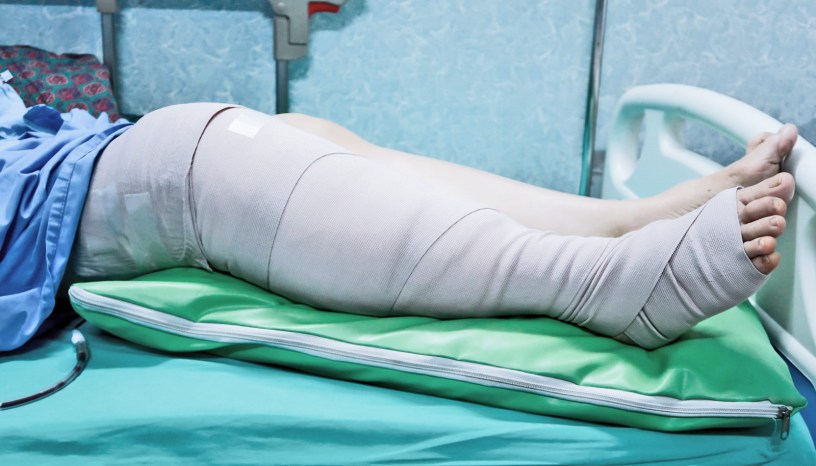
It is essential that in case of bone fractures we follow the doctor’s instructions, to prevent the loss of bone density through diet and exercise. These are some of the mandatory measures that must be taken when bone fractures occur to allow recovery without unpleasant consequences.
In the elderly, fractures are more difficult to heal because the process of bone welding slows down after the age of 35. Pain, numbness, and met sensitivity may last for months, and in some cases may remain permanent after bone welding.
Here’s what you need to do to prevent osteoporosis
The age of 35, in most cases, is the beginning of bone loss, and if this process accelerates, the bones become more fragile and their structure increasingly resembles that of a sponge that has large holes inside. In the first phase, osteoporosis does not cause pain, and the bones deteriorate in silence, for years, without any obvious symptoms. Under these conditions, it is recommended that you know the risk factors for osteoporosis and, if you are at risk, ask your doctor for a simple test called bone desiometry. Loss of bone mass leading to osteoporosis occurs more frequently in women, and statistics show that four times more women suffer from osteoporosis compared to men. Likewise, people who have a fragile bone constitution, ie weak people, they are at risk for osteoporosis because they often have lower density bones. Caution should also be exercised in people who have been treated with anti-inflammatory drugs, those who suffer from excess thyroid hormones, and people who smoke or drink alcohol frequently, as they may also suffer from low bone density.
Eat a balanced diet
Try to get enough calcium and vitamin D from the foods you eat. Vitamin D is found naturally in foods such as egg yolks and fatty fish. Although dairy products are high in calcium, a growing number of foods, such as orange juice, also contain calcium.
Fruits and vegetables also provide other important minerals for bone health, such as magnesium and phosphorus. Also, sun exposure can help us get the necessary vitamin D. In other words, it may be a good idea to spend 10-15 minutes outdoors every day.
Pay attention to body mass
This is especially important for women. Menstruation often stops in women who weigh less than they should, due to a poorly chosen diet or excessive exercise, which means that estrogen levels are too low to support bone growth.
Pay close attention to alcohol and tobacco
Alcohol and smoking lower bone mass. Experts recommend only one or two drinks a week, because excess alcohol causes a bone loss of about 2% in a year. Tobacco consumption has the same weight as alcohol in a year.
Fractures requiring surgery
Fractures can be treated in two ways: either by conservative treatments that involve rest and immobilization in plaster, or surgery that halves recovery after surgery. If surgery is decided, the joints recover faster, as do the muscles, because they no longer atrophy and lead to faster recovery after fractures. In case of vertebral fractures, the doctor may recommend immobilization in special corsets for periods of up to two months. However, if the doctor finds that the pressure produced by the fractured vertebra damages the nerves and there is a risk of paralysis, bone deformities or osteoarthritis, surgery is recommended to avoid sequelae healing.
Physical therapy and calcium
Most of the time, fractures occur as a result of minor domestic accidents. They most often occur in the elderly and are caused by osteoporosis. They can be located in the vertebrae, hips and fists, but can be avoided if the risk of losing bone density is observed in advance and if you intervene with premium dietary supplements and exercise. Physical therapy helps to restore muscles that atrophy due to the necessary immobilization in fractures, and calcium supplementation helps to strengthen bones.
 Tech Strike