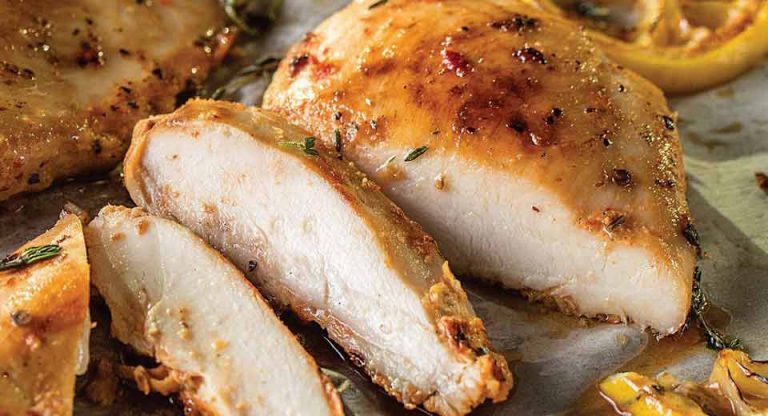
Everyone recommends eating white meat, but how many calories does a chicken breast have? And what other nutrients does it have?
If you don’t know whether to choose a chicken thigh or breast, we explain its nutritional information. Both are recommended to include in the diet, but depending on what foods we accompany them on the menu, the caloric intake of one or the other will be greater.
When it comes to lean protein, chicken breast is king. It offers an exciting 31 grams of protein per serving, without a lot of fat or calories. It is almost clear that the other meats bow to her.
Moreover, it’s very flexible. It can be fried, fried, threaded over a green salad, crumbled, and rolled up in tacos or also skewered, soaked in a peanut sauce.
There are times when you go to the supermarket and do not know whether to take some good breast fillets or some chicken drumsticks. The choice almost always depends on the food in which we are going to include them, although both have high-quality proteins with a low caloric intake, but let’s see the biggest differences between the two.
Breast fillet nutritional information
100 grams of breast satisfy 30% of the daily protein needs, providing only between 1 and 2 grams of fat. Regarding the caloric intake, it is 5% of the needs of a standard diet of 2000 kilo Carl. That is to say, little caloric intake.
You always worried about the calories of your chicken breast because you are consuming it all the time. Is it as nice as it feels for you?
HOW MANY CALORIES DOES CHICKEN BREAST HAVE?
Here are the nutritional facts for a 100 gram serving of roasted skinless chicken breast:
- Calories: 165
- Protein: 31 g
- Fat: 4 g
- Saturated fat: 1 g
- Carbohydrates: 0 g
- Fiber: 0 g
- Sodium: 74 mg
Consider the discrepancies as the skin is maintained:
- Calories: 197
- Protein: 30 g
- Fat: 8 g
- Saturated fat: 2 g
- Carbohydrates: 0 g
- Fiber: 0 g
- Sodium: 71 mg
As you can see, keeping the skin doubles the fat and saturated fat content, but adds a modest amount of calories, about 30.
Related: “Snacks that are low in calories.”
It is necessary to note that these figures are for a portion of 100 grams. This is over half the typical breast of chicken. Here’s what you’re going to get for a full, skinless chicken breast:
- Calories: 284
- Protein: 53 g
- Fat: 6 g
- Saturated fat: 1.7 g
- Carbohydrates: 0 g
- Fiber: 0 g
- Sodium: 127 mg
So if you eat it all, you’ll get much protein, but also more calories and fat.
Related: “34 Protein-Rich Breakfasts That Will Help You Lose Weight”
THE NUTRITION YOU FIND IN CHICKEN BREAST
The chicken breast contains much protein. It also provides 6% daily iron content per 100 g serving, which allows your body to bring oxygen through the body and promotes the role of the immune system.
According to studies reported in the journal Food & Nutrition Science, chicken breast usage is often connected with the lower risk of overweight and developing coronary disorders and diabetes.
The study authors have noticed that chicken breasts provide a highly high nutritional quality for women during pregnancy and breast-feeding, including B vitamins and zinc. (It’s nice to know whether or not you’re at this stage).
Make confident the chicken is not overrated. Thus. Here, the healthiest way to do this is to be discovered.
 Tech Strike