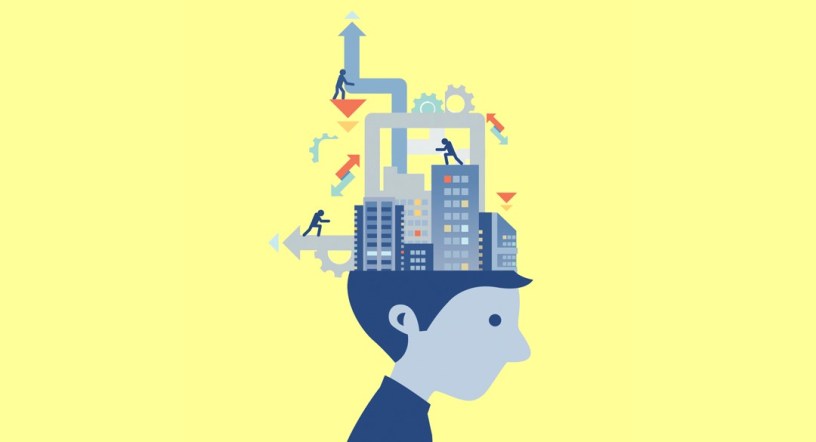
Did you know that your resilience can have a big influence on your mental health?
The ability to “bounce back” when life challenges us, can have a big influence on mental health? Good news: it can be learned and can be improved.
4 ways to become more resilient
There is no “secret formula” for dealing with difficult situations, but resilience is not just about luck or genetics. Even if you don’t think you’re particularly resilient, you can practice bouncing back after an ordeal. Here are 4 behaviors of resilient people to adopt:
1. Become aware of yourself and maintain an internal dialogue
Are you positive by nature, or do you see things in black? Positive thoughts can lead you to take an optimistic, often more realistic, approach. It can be difficult to be thankful in the midst of bad news or discouragement. When harboring negative thoughts, ask yourself if you are right to worry or to doubt. If not, or if things aren’t as dire as you might think, try to be positive. Try to see the larger picture, too, and what you should be grateful for. Family? The friends? Health? Financial security? The chance to start over? When the going gets tough, being able to see the “glass half full” can help to be more resilient.
What you can do: Keep a journal or take notes on your smartphone, and write down three positive things that have happened to you every day. After 6 weeks, see if you notice a difference in your level of well-being and your ability to cope with difficult situations.
2. Maintain good social relations
Good relationships can reduce health risks; not having social activities can have the opposite effect. Studies show that isolation is (or could be) as bad for your health as smoking, high blood pressure, or obesity. So it can be really useful to maintain good social relations.
What you can do: Plan something every week that will strengthen one of these relationships. Find ways to make new connections, too, whether that’s by signing up for a course or volunteering.
3. Adopt healthy habits
Your lifestyle, the exercise you do, and your eating habits can increase your physical strength and resilience. Exercise can improve mood, while diet can impact both physical and mental health.
What you can do: Set realistic goals. They may relate to your fitness (e.g., walking 10,000 steps per day) or your diet (e.g., preparing your lunch two days a week). In fact, if this is your first time setting goals, it’s best to start small. The sense of accomplishment when you cross these goals off your list will encourage you to keep going.
4. Set your limits
Having limits can help you focus on what you can control and come to terms with what you can’t. The boundaries you set between your work and your personal life will likely be different from those around you. Some people prefer a highly integrated model where work and life frequently overlap, while others prefer a more segmented model, where there is little overlap.
What you can do: Technology can blur the lines between work and life. Decide when you will be electronically reachable outside of your working hours and stick to them. Decide on your limits, otherwise, you will feel powerless and may burn out. Try to say “no” to the additional responsibilities, and if you’re overloaded, prepare a list of tasks to delegate.
In conclusion
Being resilient enough to bounce back from an ordeal is a skill that can be learned and worth practicing. It help you deal with negativity, overcome obstacles, accept what you cannot change, and protect your mental and physical health.
Kentucky Case Management provides you best mental health services. Contact us for more details.
 Tech Strike